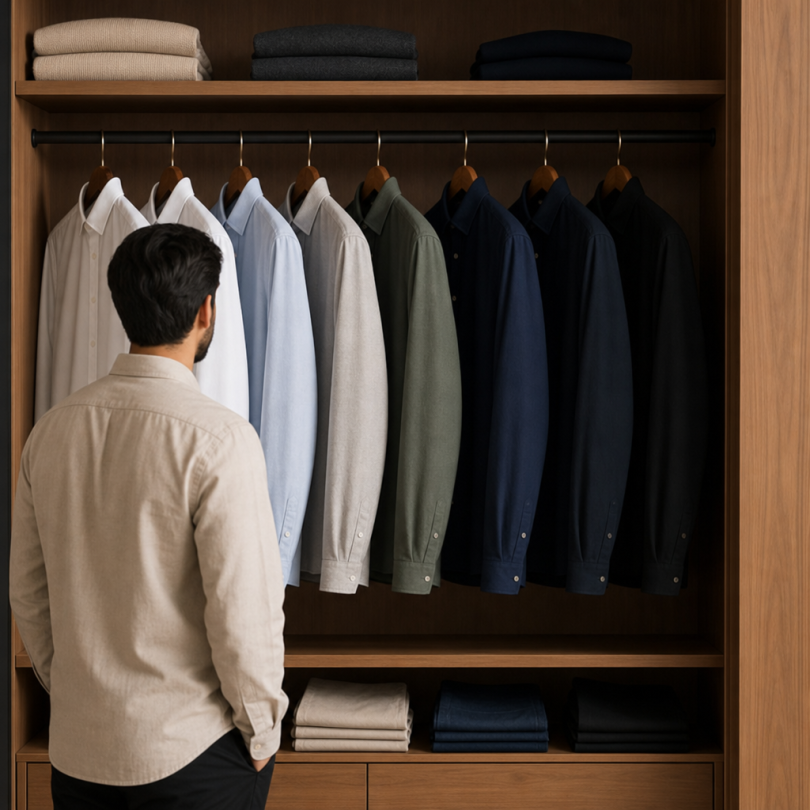

Most people wear a small fraction of their wardrobe on repeat while the rest hangs untouched, still carrying the memory of the money it cost. A capsule wardrobe fixes that. It is a small, carefully chosen collection of clothes that all work together, so getting dressed takes minutes and almost every combination looks deliberate. Building one does not mean buying an expensive new wardrobe — it starts with understanding the capsule wardrobe essentials you probably already own, and filling only the gaps that remain.
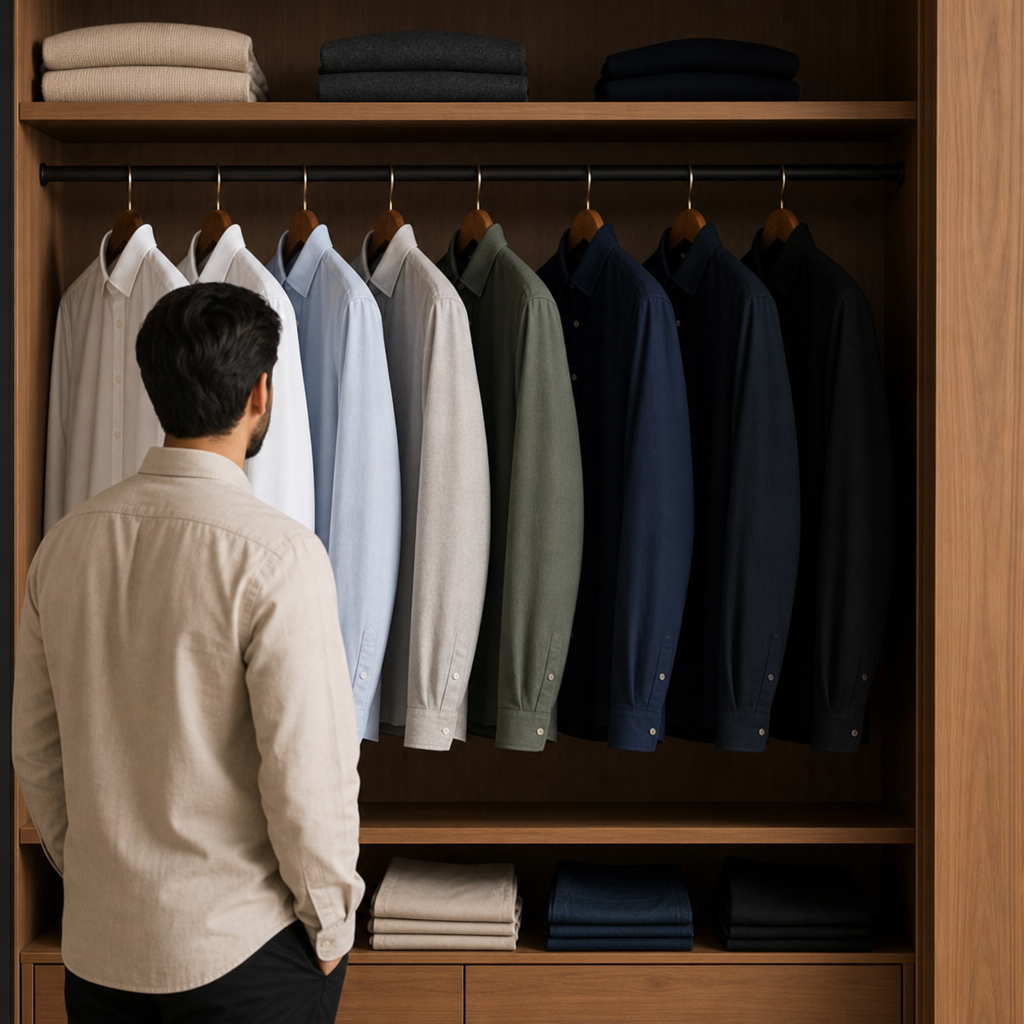
What a Capsule Wardrobe Really Is
A capsule wardrobe is typically 25 to 40 pieces — including shoes and outerwear, excluding underwear, sportswear and special-occasion outfits — selected so that nearly every top matches nearly every bottom. The magic is not the small number; it is the coordination. When your colours, fabrics and styles agree with each other, thirty pieces can produce more distinct outfits than a hundred random ones. The capsule is rebuilt or refreshed each season, with out-of-season pieces stored away rather than crowding your daily choices.
Step One: Start With What You Already Own
Before buying anything, empty your wardrobe completely and sort honestly. Keep only what fits you now, suits your actual life, and makes you feel good when you wear it. Notice what survives: those pieces reveal your real style far better than any trend list. Most people discover they already own half their capsule — the favourite jeans, the plain shirts worn weekly, the jacket that goes with everything. The pile you remove is not failure; it is information about what never to buy again.
The Core Pieces Every Capsule Needs
While every capsule reflects its owner, a reliable core looks similar everywhere. Bottoms: two pairs of well-fitting trousers or jeans in neutral colours, plus one skirt or alternative you genuinely wear. Tops: plain t-shirts and shirts in white, black and one or two colours that flatter you, in fabrics that layer comfortably. Layers: one structured blazer or jacket, one warm knit, and one versatile coat for your climate. Dresses or one-piece outfits if they suit your life — one or two that can dress up or down. Shoes: three pairs cover most lives — everyday comfortable shoes, a smarter pair, and seasonal boots or sandals. These capsule wardrobe essentials form the skeleton; your personality hangs on them.
Choose a Colour Palette and Stick to It
Coordination becomes easy when colours are limited on purpose. Pick two or three neutral base colours — black, navy, grey, beige, white — that dominate your bottoms and outerwear, then two or three accent colours for tops and accessories. Every new purchase must match the palette or it does not come home, however beautiful it looks in the shop. This single rule is what turns separate clothes into a wardrobe, and it makes shopping faster and far less wasteful.
Fabric and Fit Matter More Than Quantity
A capsule piece is worn constantly, so quality shows quickly. Natural and blended fabrics that breathe, wash well and resist pilling will outlast three cheap equivalents. Fit matters even more: a plain shirt that fits your shoulders and length perfectly looks more expensive than a designer piece that pulls and bunches. Budget for small alterations — a shortened hem or a taken-in waist transforms an almost-right garment into a favourite. For relaxed days, the outfit ideas in our guide to casual weekend outfits that look effortless and polished show how far a few well-fitting basics can go.
Build Outfits, Not Just a Collection
Once the pieces are chosen, spend twenty minutes actually building outfits — photograph ten combinations you like and save them on your phone. This sounds unnecessary until the first rushed morning, when the photos end decision fatigue completely. Check for gaps honestly: if every outfit needs the same belt or the same shoes, that accessory is a genuine gap worth filling. If a piece appears in no outfit, it does not belong in the capsule, whatever it cost.
Maintain It: The One-In, One-Out Rule
Capsules fail when they quietly refill. Adopt the rule that a new piece enters only when a similar one leaves, and review the whole wardrobe at each season change. Store off-season clothes out of sight so your daily rail always shows only what you can wear now. When you shop, shop with the palette and the outfit photos in hand, and ask the only question that matters: does this work with at least three things I already own?
Adapt the Capsule to Your Real Life
A capsule only works when it matches the life you actually live. Someone working in a formal office will weight the collection toward tailored pieces and keep casual items few; a parent working from home needs the reverse, plus fabrics that survive frequent washing. Climate matters just as much — a capsule for a hot, humid city is built on breathable layers and sandals, while a cold-climate capsule lives or dies by its coat and knitwear. Write down how your week really splits — work, home, social, formal — and let those proportions, not a magazine list, decide your proportions too.
Common Mistakes That Break a Capsule
Three mistakes undo most first attempts. The first is buying a whole new wardrobe at once: expensive, and usually in a style that turns out not to be yours — build gradually from what you own instead. The second is choosing colours you admire on other people rather than the ones that suit your skin and hair; a capsule in the wrong palette coordinates perfectly and flatters never. The third is keeping “aspirational” clothes for a size or a lifestyle you do not currently have. They occupy the rail, create guilt every morning, and crowd out the clothes that would actually get worn.
The Bottom Line
A capsule wardrobe is not minimalism for its own sake — it is a wardrobe where everything earns its place. Start from what you already love, anchor it with proven capsule wardrobe essentials in a tight colour palette, favour fit and fabric over quantity, and maintain it with one-in, one-out. Mornings get faster, outfits get better, and shopping becomes a short, satisfying list instead of an expensive habit.