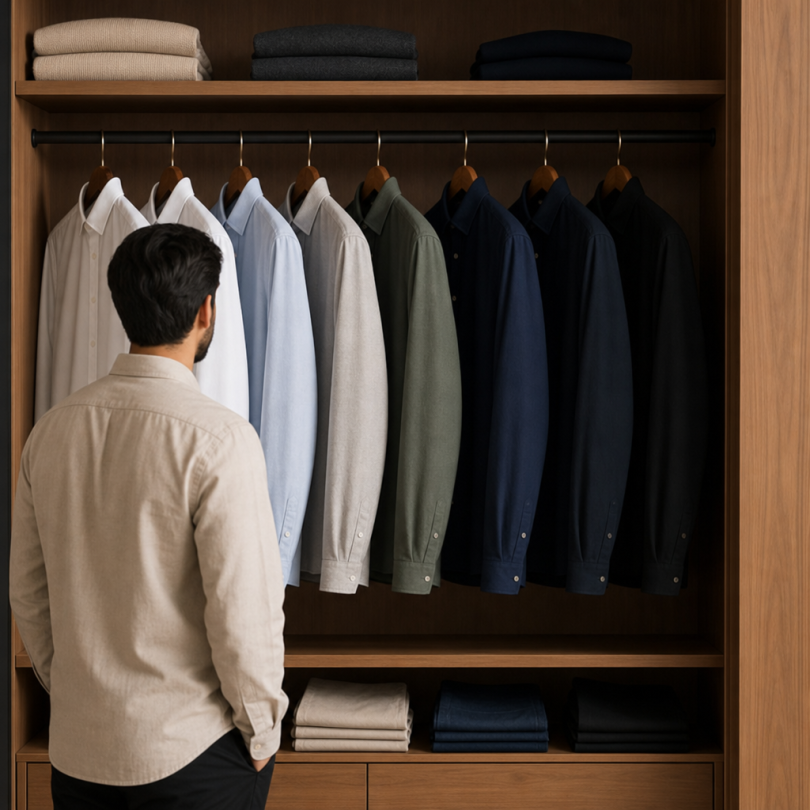

Looking polished at work every day is not a budget problem — it is a system problem. People with expensive wardrobes repeat outfits accidentally and still feel they have nothing to wear, while a small, planned rail of clothes can produce a different outfit every working day of the month. Building a work wardrobe on a budget means buying pieces that combine with each other, in an order that unlocks the most outfits earliest, and spending the limited money where it is visible: fit, fabric and the items closest to your face.
Start With the Colour Rule
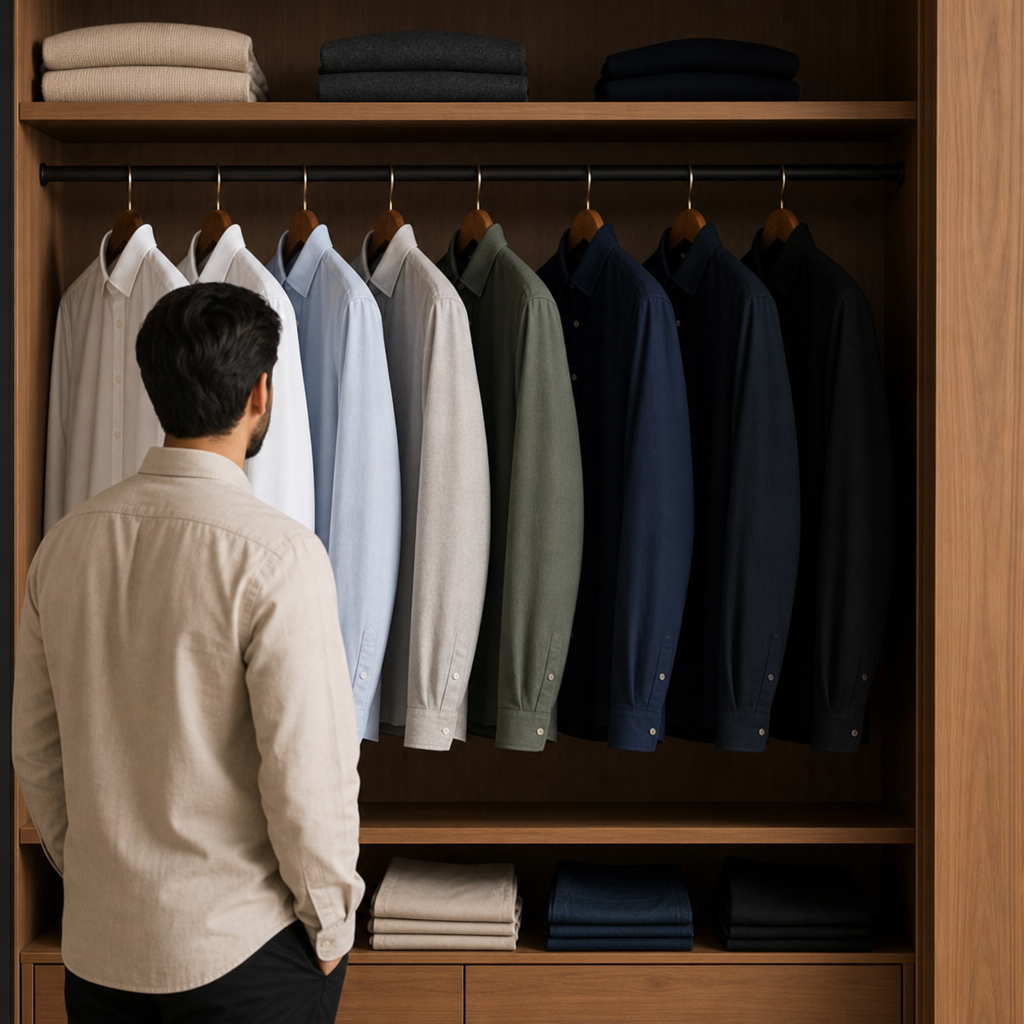
Every mix-and-match wardrobe stands on a restricted palette. Choose two neutrals that suit you — navy and grey, black and camel, charcoal and white — and one accent colour family. From that moment, every purchase must work with the palette or it does not come home, however beautiful it is alone. This single rule is what converts twelve separate items into thirty outfits: when everything combines, nothing is orphaned. It is the same principle behind a capsule wardrobe, applied to the working week, and it matters more than any individual garment you will buy.
The Core Pieces, in Buying Order
Buy in this order, because each step multiplies the previous ones. First, two pairs of well-fitting trousers or skirts in your two neutrals — fit matters more than brand, and a small alteration costs little. Second, five tops that all work with both bottoms: a mix of shirts, blouses or fine knits, plain before patterned. Third, one structured jacket or blazer in a neutral that layers over everything; this is the single most transformative item in a work wardrobe, turning separates into an outfit. Fourth, shoes — one comfortable, polished pair you can genuinely walk in. Only then add variety: a dress, a second jacket, accessories. Most people buy in the reverse order, collecting interesting tops while the foundations wobble.
Where to Spend and Where to Save
Spend on what touches the eye and takes the wear: the jacket, the shoes, and trousers you will sit in for ten hours. Save on what is simple, washable and partially hidden: plain tops, basic knitwear, belts. Fabric beats label at every price — a plain cotton or wool-blend piece from a modest brand looks more expensive than a shiny synthetic with a famous logo. Check seams, buttons and lining before the price tag; construction is visible at conversational distance, branding is not.
Fit Is the Real Luxury
The difference between a budget outfit and a cheap-looking one is almost always fit. Sleeves that end at the wrist bone, trousers that break correctly on the shoe, a jacket that buttons without pulling — these signals read as “expensive” regardless of the receipt. Budget for one or two alterations per key piece; a tailor shortening sleeves and taking in a waist costs a fraction of the garment and upgrades everything it is worn with. When shopping, buy for the body you have today, and treat anything that needs “a bit of weight loss to work” as money already wasted.
The One-In Rule and the Wish List
A budget wardrobe stays a wardrobe, not a pile, by one discipline: nothing enters on impulse. Keep a written wish list built from gaps you noticed while dressing — “a plain white shirt would unlock three outfits” — and buy from the list, in priority order, when sales or good second-hand pieces appear. Second-hand deserves emphasis: workwear staples are the best-value category in charity shops and resale apps, because blazers, trousers and leather shoes are durable, common and often barely worn. A planned list turns a sale from a temptation into a tool.
Plan the Week, Not the Morning
The final system costs nothing: on Sunday, hang five complete outfits in order. Mornings stop being negotiations, laundry becomes predictable, and you discover your real gaps — the pieces that would complete the outfits you almost have. Photograph combinations that work; on tired mornings, the camera roll decides. This small ritual is also what makes the wardrobe feel larger than it is, because planned variety reads as abundance in a way that random grabbing never does.
Care Extends Everything
Budget pieces survive on care. Rotate shoes with a rest day between wears, hang the jacket to air instead of washing it, treat stains the same evening, and learn three repairs — a button, a hem, a loose seam — that take ten minutes each. A garment that lasts three years costs a third per wear of one that lasts one; cost-per-wear, not price, is the honest measure of a budget wardrobe, and care is how the arithmetic improves.
A Two-Week Rotation That Proves the System
Still doubting that a small rail can carry a working life? Run the experiment the system is built on. Take your two neutral bottoms and five tops: that is ten combinations before the jacket exists. Add the jacket and every combination gains a second, smarter version — twenty. Add one dress and a second pair of shoes and you pass a month of working days without an exact repeat, from roughly ten pieces. Write the rotation down the first time you build it; the list itself is the proof, and it is also the shopping list, because the combinations you cannot make point precisely at the one piece worth buying next. People who do this exercise stop browsing randomly, because the wardrobe stops being a feeling and becomes arithmetic — and arithmetic, unlike taste on a tired morning, can be trusted.
The Bottom Line
A work wardrobe on a budget is a palette, a buying order and a handful of habits: neutrals that all combine, foundations before variety, money spent on fit and the visible pieces, a wish list instead of impulses, and five outfits planned on Sunday. Follow it and a small rail of clothes outperforms wardrobes three times its price — at work, looking intentional is the whole game, and intention is free. Start with the palette and the two bottoms this week; the system builds itself from there.